News · 4 min read
Catena Media blames AI search for a 29% revenue drop

Catena Media says third-quarter revenue fell 29% to 8.3 million euros, and it blames generative search and lower-quality results. Here is what it reported, why CPA deals made it worse, and what to watch on 10 November.
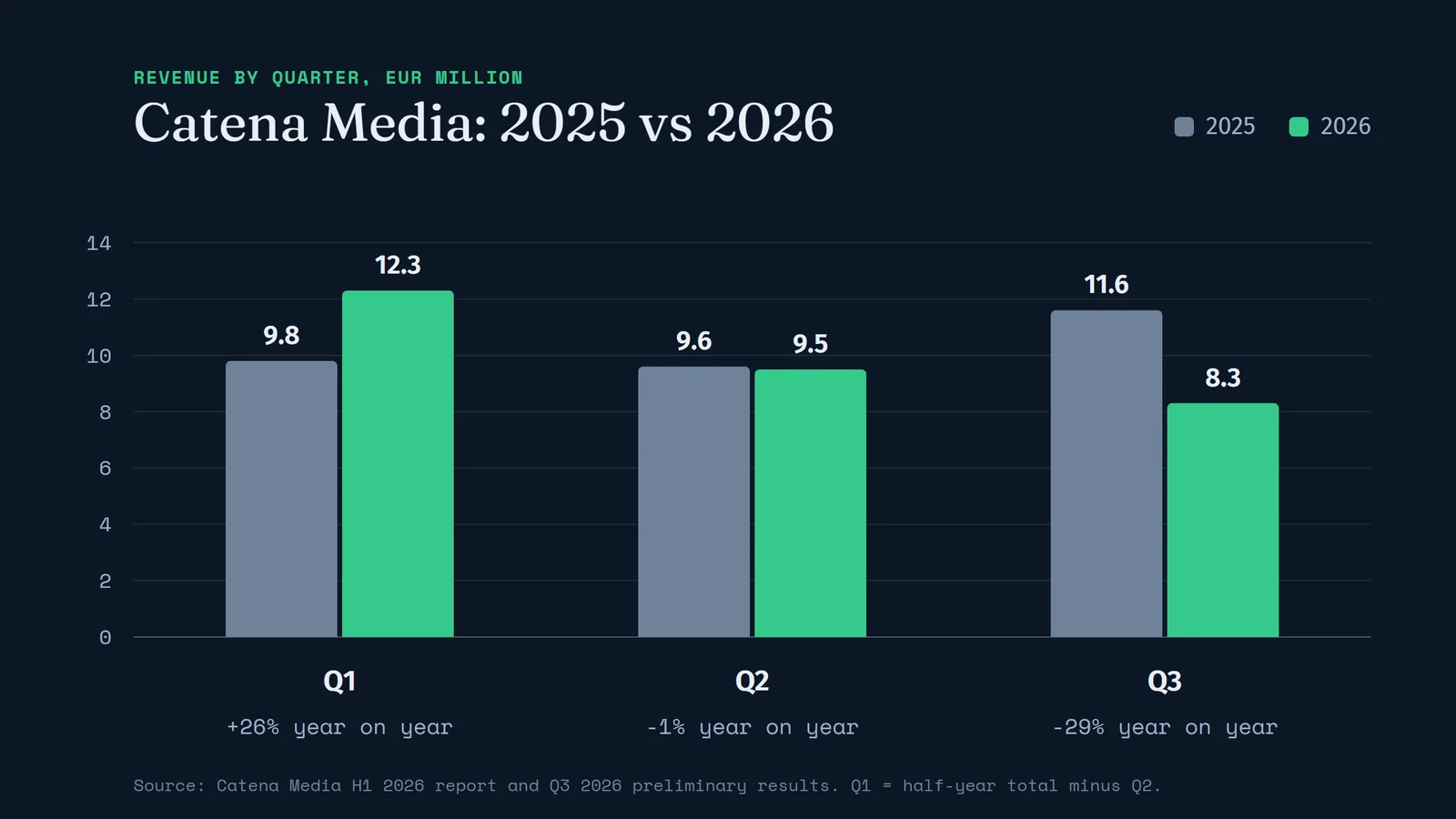
Catena Media, one of the affiliate groups on our stock board, published preliminary third-quarter numbers on 16 October. Revenue fell 29% year on year, to €8.3 million from €11.6 million. On the next trading day, Monday 19 October, the share closed about 21% lower on Nasdaq Stockholm.
The drop is big, but the explanation is the interesting part. Catena put it squarely on search.
What Catena reported
- Q3 revenue of €8.3 million, down 29% (€11.6 million a year earlier).
- Revenue for the first nine months of €30.1 million (€31.0 million).
- Q3 adjusted EBITDA of €0.7 million (€2.9 million). That includes a €0.7 million reversal of bonus accruals, so the underlying quarter was close to zero.
- A non-cash impairment of €30 to €35 million on intangible assets.
- The 2026 target of double-digit organic growth in revenue and adjusted EBITDA is gone.
All of it is preliminary and unaudited. The full interim report comes out on 10 November.
How Catena explains it
The release names three causes. Generative search is changing how people find brands, which cuts new traffic across the whole affiliate industry. Catena’s own rankings fell, both because of AI-assisted, personalized search and because search engines keep pushing lower-relevancy content up the results. And some operators cut their marketing budgets over the summer.
Then there’s the business model. Catena gets more than 90% of its new customers on CPA deals, so it has little recurring revenue to soften a bad quarter. CEO Manuel Stan called it a “rapid and fundamental shift” in search.
Why CPA makes it hurt more
A CPA deal pays once, when a referred player makes a first deposit. Revenue share keeps paying for as long as the players you sent keep playing. That back book is what carries a revenue-share affiliate through a weak quarter.
A business that runs almost entirely on CPA has no such cushion. When search traffic drops, new depositing players drop with it, and revenue follows in the same quarter. Catena says as much in the release.
What “lower-relevancy content” points to
Catena doesn’t say which pages it means. Anyone who works casino and betting results will have a shortlist, though: forum threads and Reddit posts, casino and betting sections on big news domains (the thing Google’s site reputation abuse policy is meant to stop), and AI answers that keep the click on Google.
It’s also mostly a US story. In its Q2 report, Catena said North America brings in 97% of group revenue from continuing operations. The same report already pointed at organic search: revenue was flat while new depositing customers grew 23%.
And the fourth quarter didn’t start any calmer. Google’s fourth spam update of the year only finished rolling out in October, and search volatility stayed high after it.
What Catena is doing about it
Catena wants to depend less on search. The plan has three parts: TraffiqX, a new platform it expects to launch in the first quarter of 2027; new verticals such as prediction markets; and loyalty programs for its own brands, like PlayPerks on PlayUSA.com. Its MRKTPLAYS platform already brings in more than a third of group revenue, according to the Q2 report.
My take
This is one of the clearest statements yet from a listed affiliate that AI search is costing it money. Earnings reports usually wrap this in softer language about market conditions. Catena named generative search, personalized results and lower-quality pages, and booked an impairment next to them.
Three things stand out to me for anyone running an affiliate site:
- Your deal mix is a search strategy. CPA turns a ranking drop into a revenue drop in the same quarter. Revenue share and hybrid deals buy you time.
- Own the audience, not only the rankings. Catena’s answer is loyalty programs and a platform that doesn’t depend on Google. Smaller affiliates can do the same with newsletters, communities and a brand people search for by name.
- AI visibility is part of the job now. If generative search is where new players start, being cited in those answers matters as much as ranking below them.
I’ll update this post when the full report comes out on 10 November. The parts I’m most curious about are how the drop splits between casino and sports, what the impairment covers, and what TraffiqX actually is.
Disclosure: HIREQUARTERS, the agency I founded, has written content for Catena Media.